This post may contain affiliate links. Please read my disclosure policy for more details.
This Creamy and creamy artichoke soup is smooth, refreshing and creamy like lemon. It’s easy to make, and perfect for dinner parties or cozy midweek dinners.
Published May 2023/updated April 2026

I always keep a can of artichoke hearts in my pantry. It’s comfortableadd something special for you pasta And saladand is Good pizza.
Join my newsletter to get free weekly recipes!
You will be happy on how delicious this soup is delicious when you combine a can of artichoke hearts with a few everyday ingredients such as potatoes, fresh parsley, and lemon juice.
It makes the perfect spring soup recipe: fresh, bright and soft.
The artichoke flavor is not dominant, but it is soft and combines beautifully with a touch of fresh lemon. That recipe call for a little creamjust enough to add texture without considering it’s down, but it’s also easy to replace it with a vegan or dairy-free alternatives if you wish (see my notes below).
Best of all, it is also very easy to make and came together from start to finish in just a short time 30 minutes or more. And that’s only natural vegetarian and gluten free.
So next time you’re at the store, grab a can of artichoke hearts, and let’s make this delicious artichoke soup!
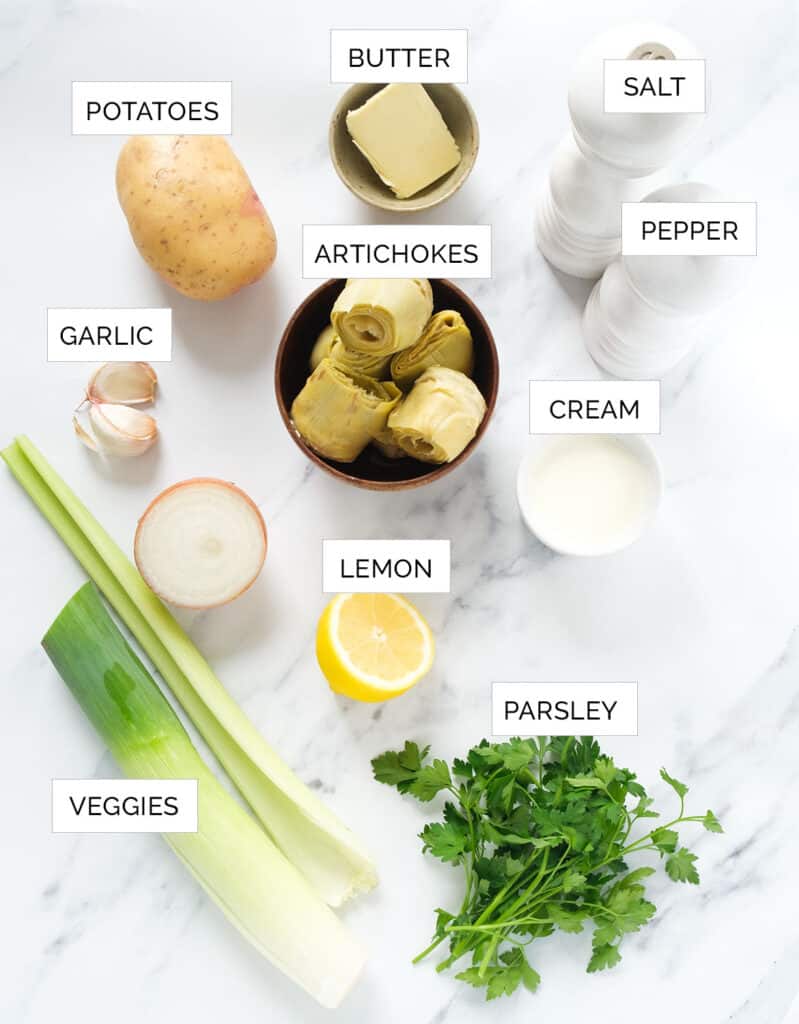
List of ingredients
- Artichoke hearts (canned or frozen)
- Potato
- Leeks
- Onion and garlic
- Butter (or olive oil)
- Vegetable broth
- Cream
- Fresh parsley
- Orange juice
- Salt & pepper
How to make
(Note: this is a short description; the complete recipe is at the bottom of the page)
- Saute the onions, leeks, celery and garlic in a little butter.
- Stir in the potatoes and artichoke hearts (reserve a few leaves from one artichoke heart; you’ll use them later).
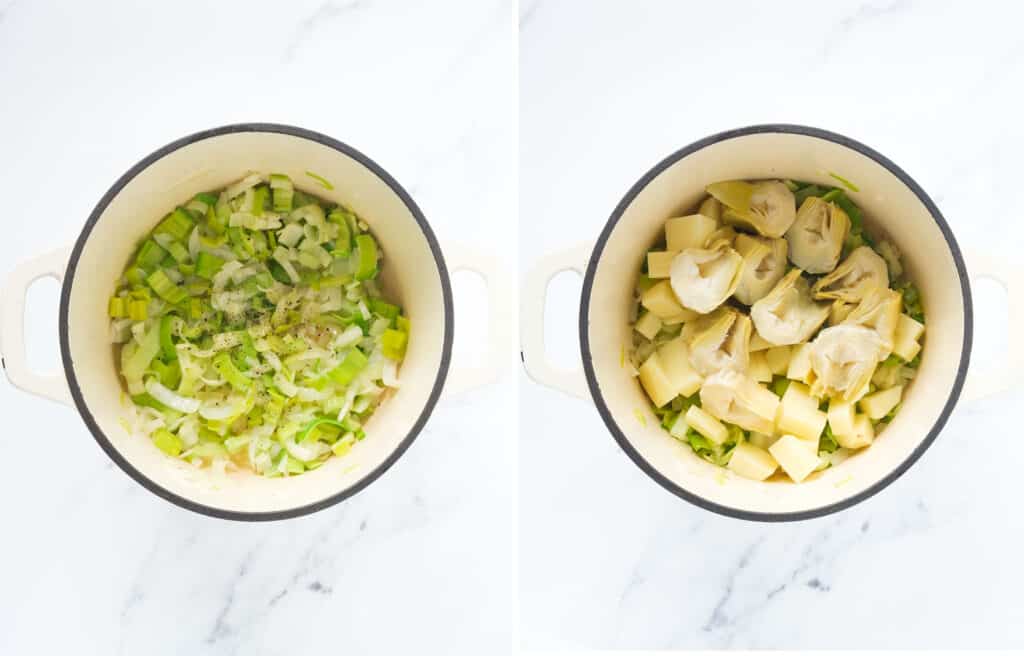
- Add the vegetable stock and spices and cook for approx 15 minutes.
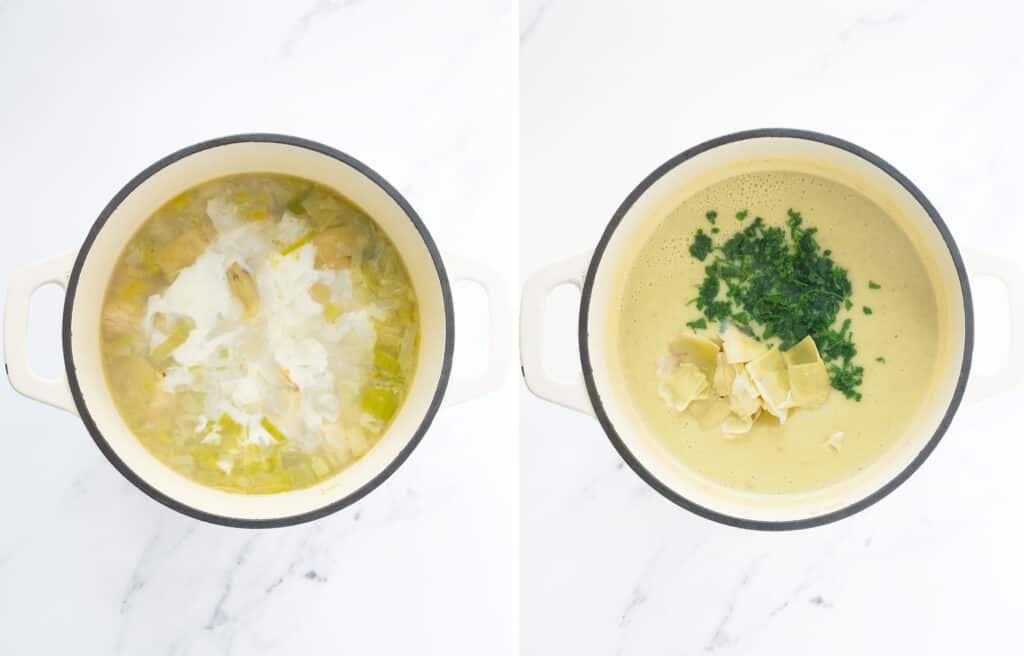
- Add the cream, let it boil a few minutesThen mix until smooth.
- Add parsley, lemon juice, and artichoke leaves, and sserve crispy croutons, panini breador this is delicious, Easy focaccia.
Recipe notes
Artichoke soup ingredients
Before we get into the recipe below, here are some notes about the ingredients:
Canned Artichokes: I used 1 can whole artichoke hearts in brinebut you can use the same amount thawed artichokes (previously frozen), Of course! : )
Vegetables: Potatoes add some body and thickness to the soup. Shallots, leeks and garlic are important aromatic ingredients.
Cream: I just use 1/3 cup light cream (single cream for my British readers). I found that llow fat content works well in terms of texture. But feel free to use full-fat cream if you prefer a richer soup, and if you want to make it vegan, I recommend swapping in the same amount of light cream. cashew cream or your favorite dairy-free/vegan alternative. It’s easy!
Butter: I use butter for a more rounded flavor, but olive oil works too, and is a great vegan option.
Lime: To enlighten This artichoke soup, also masks the sour taste citric sour, often used to preserve canned and frozen artichokes.
Parsley: Fresh and flavorful, parsley isn’t just for garnish; it goes well with artichokes, lemon, and potatoes. Thyme or dill can be used instead of parsley if you prefer.
Broth: I prefer light ones, low sodium vegetables broth or water to keep the soup and its flavor light.
Salt & pepper: Adjust the seasoning to your taste and serve the soup with plenty of freshly ground black pepper.

For the best texture!
- I’ve always been a big fan vitamixbut you can use an immersion blender or stand blender. It’s okay if you don’t get it super smooth texture here; a few bits here and there are fine.
- If you use a stand blender, make sure the soup has cooled for at least 5 minutes, then puree in batches, filling the blender about half way.
- Blend for just a few secondswhatever method you use! You don’t want to overwork the potatoes; they may release too much starch, making the soup sticky.
- To add extra layer of texture, add petals of 1 artichoke heart according to recipe.
Storage tips
Store leftover artichoke soup in the refrigerator in an airtight container until maxed out 3 days. To reheat, add a little water to thin to the desired consistency, then warm gently over medium-low heat or in the microwave.

Soup is better?
A quick and creamy vegetarian soup is with deliciousnesss, easy to put together, and cheap. Here are some of my favorite recipes:
If you make this artichoke soup recipe or if you have any questions, let me know! Leave a comment, send me a message, or rate it.
I’d love to hear your thoughts!
And for more recipe updates, subscribe to my newsletter and follow me Instagram, PinterestAnd Facebook.
Artichoke Soup
Portion: 4
Calories: 192kcal
- 2 tablespoons (30 grams) butter (or olive oil)
- ½ onion, peel and cut into cubes
- 1 leeks, peeled and chopped
- 1 celery ribs, chopped
- 1 large garlic cloves, chopped
- 1 can artichoke hearts, drained
- 1 (250 grams) big potato, peel and cut into cubes
- 2 ½ cups low sodium vegetable broth, use more if you prefer a thinner soup
- ¾ teaspoon fine salt
- ⅛ teaspoon black pepper, plus more for serving
- ⅓ cup (80ml) low fat cream (full fat is fine too)
- 2 tablespoon orange juice
- 1 stack tablespoon chopped parsley, plus more for serving
-
Mince the garlic, peel and dice the onions, potatoes and leeks. Cut the artichoke in half, but reserve the petals from 1 artichoke heart for later.
-
Melt the butter in a large saucepan/Dutch oven over medium heat. Add onions, leeks, celery, garlic, plus a little salt and pepper. Saute for 5 minutesstir occasionally.
-
Add potatoes, artichokes, stock, salt, and pepper. Bring to a boil, reduce heat to a simmer, cover, and cook for about 15 minutes. Stir occasionally.
-
Add cream, and cook a few minutes. Turn off the heat and let it cool slightly.
-
Puree the soup Quickly use a stand blender or hand blender. If you’re using a stand blender, be careful, work in batches (it’s still hot!), and don’t over-blend (it’s okay if the texture isn’t smooth enough).
-
Return the soup to the pot, stir in the lemon juice, parsley and taste and adjust the consistency and seasoning if necessary.
-
Divide the soup into 4 bowls, sprinkle with chopped parsley and freshly ground black pepper, and add lemon wedges for extra lemon juice if desired. Don’t forget the crusty bread or crunchy croutons!
Salt: the amount of salt called for in the recipe is for low-sodium vegetable stock.
Adjust the seasoning at the end, especially if using regular sauce. I would not recommend using chicken or beef stock for this soup recipe; they can be a little overdone in this recipe.
Nutrition facts: nutritional values are for one serving and are based on an online nutrition calculator. These are estimates only, and should not be considered a substitute for the advice of a professional nutritionist. Please see mine disclosure policy.
Calories: 192kcal | Carbohydrate: 17G | Proteins: 2G | Fat: 13G | Saturated fat: 8G | Polyunsaturated fats: 1G | Monounsaturated fats: 3G | Trans Fat: 1G | Cholesterol: 39mg | Sodium: 63mg | Potassium: 358mg | Fiber: 2G | Sugar: 3G | vitamin A: 859IU | Vitamin C: 19mg | Calcium: 41mg | Iron: 1mg
Join my newsletter to get free weekly recipes!
PakarPBN
A Private Blog Network (PBN) is a collection of websites that are controlled by a single individual or organization and used primarily to build backlinks to a “money site” in order to influence its ranking in search engines such as Google. The core idea behind a PBN is based on the importance of backlinks in Google’s ranking algorithm. Since Google views backlinks as signals of authority and trust, some website owners attempt to artificially create these signals through a controlled network of sites.
In a typical PBN setup, the owner acquires expired or aged domains that already have existing authority, backlinks, and history. These domains are rebuilt with new content and hosted separately, often using different IP addresses, hosting providers, themes, and ownership details to make them appear unrelated. Within the content published on these sites, links are strategically placed that point to the main website the owner wants to rank higher. By doing this, the owner attempts to pass link equity (also known as “link juice”) from the PBN sites to the target website.
The purpose of a PBN is to give the impression that the target website is naturally earning links from multiple independent sources. If done effectively, this can temporarily improve keyword rankings, increase organic visibility, and drive more traffic from search results.