This Pumpkin Curry is thick, velvety, rich, and flavor-packed, with tender fresh pumpkin, warm spices, and creamy coconut milk. I love curry year-round, but there’s something special about those crisp autumn months that really makes me crave it, and this one does the trick! It’s a completely vegan meal that comes together in less than an hour, and at $2.74 per serving, it feels restaurant-worthy without the restaurant price. Serve it over a fluffy bed of rice (which is included in this recipe cost!), and you’ve got comfort in a bowl. I love this pumpkin curry so much, and honestly, I have a feeling I’ll be making it all season long!
Two Kinds of Pumpkin, One Cozy Curry
If you’ve never cooked with fresh pumpkin, don’t worry, I’ve got your back! Grab a pie pumpkin and follow my step-by-step photos, taking your time and using your handy dandy chef’s knife. Breaking down the pumpkin is the most hands-on part of this recipe, but once it’s diced, the rest comes together pretty quickly. Can’t find a pie pumpkin? Don’t fret. Butternut squash can step in here (or try our butternut squash curry, which is another cozy option!)
Once the pumpkin is diced, I build serious flavor with simple ingredients like fresh garlic, ginger, tomato paste, and warm spices. I also use both fresh pumpkin and pumpkin purée in this recipe for a reason. The fresh pumpkin stays tender but still gives you a little bit of bite, and the purée helps create that rich, thick sauce I want in this curry. Sauté the pumpkin and onions until they start to soften, then add fresh garlic and ginger to build a fragrant base. Tomato paste helps deepen the flavor, and the warm spices and creamy coconut milk bring everything together. Then I finish it with a little brown sugar to balance the spices and add subtle, warm molasses notes. Give it one more taste, adjust the seasoning, and don’t be scared to add an extra splash of broth if needed. Personally, I like my curry thick and velvety. 😋
Recipe Success Tips
- Not sure what a pie pumpkin is? They’re also known as sugar pumpkins or cooking pumpkins. They’re smaller than carving pumpkins, usually about 6-8 inches in diameter, and are sold mostly in the fall. Pie pumpkins are grown for cooking and baking and tend to have sweeter, denser, more flavorful flesh with less stringy pulp than carving pumpkins. (Avoid carving pumpkins for this reason!)
- Aim for roughly ½-inch pieces when dicing the pumpkin. They don’t need to be perfectly identical, but keeping most of the pieces around the same size helps them become tender at roughly the same time. This way, you won’t end up with some pieces still firm while others get too soft. See my prep photos below for a visual reference on how small I dice my pumpkin!
- Make sure the oil in the pan is nice and hot before adding the pumpkin. This will help it brown on some sides and not stick to the pan. Also, letting it sit undisturbed for the first 5 minutes or so will help it sear.
- Don’t cook the pumpkin until it’s falling apart! You want it tender enough to easily pierce with a fork, but the cubes should still hold their shape and have a little bite. Remember, the pumpkin keeps cooking once you add the coconut milk and pumpkin purée, so letting it get too soft early on can leave you with mushy pieces by the end.
- Adjust the consistency to your liking. I like my curry on the thicker side, so I only add ¼ cup of vegetable broth at the end to loosen the sauce. If you prefer a thinner curry, stir in a little more broth until it reaches the consistency you like.
- Bulk it up with some protein or extra veggies. This pumpkin curry is already plenty hearty, but it’s also easy to add to. Add canned chickpeas (drained & rinsed) or cooked shredded chicken (if you’re not keeping the recipe vegan) at the end for some extra protein, or add veggies like bell peppers, carrots, spinach, or other greens. Firmer vegetables can cook with the pumpkin, but I’d stir in leafy greens near the end so they don’t overcook.

The Pie Pumpkin Breakdown
Instead of trying to peel a whole pumpkin, I cut it into wedges first. It’s much easier to handle, and it makes getting those even ½-inch cubes a lot simpler. All you need is a sturdy cutting board, a spoon, and a sharp chef’s knife to get your pie pumpkin curry-ready!
- Halve and scoop: Carefully cut the pie pumpkin in half from top to bottom, starting just beside the stem. Scoop out the seeds and stringy pulp with a spoon. Save those seeds for roasting if you’d like!
- Trim and slice: Cut away the stem and the small piece at the bottom of each half. Place the pumpkin cut-side down on your cutting board so it sits nice and steady, then slice each half into roughly ½-inch-wide wedges.
- Peel the pumpkin: For this pumpkin curry, I remove the skin before cooking. Working with one wedge at a time makes this much easier than trying to peel the whole pumpkin at once. Use your chef’s knife to carefully slice the skin away from each wedge.
- Dice it small: Cut the peeled wedges into roughly ½-inch cubes, like the ones shown in the photo here. They don’t need to be perfectly identical, but keeping them close in size helps them cook at the same rate in the curry.


Print
Add to Collection Go to Collections
Pumpkin Curry
#wprm-recipe-user-rating-0 .wprm-rating-star.wprm-rating-star-full svg * { fill: #343434; }#wprm-recipe-user-rating-0 .wprm-rating-star.wprm-rating-star-33 svg * { fill: url(#wprm-recipe-user-rating-0-33); }#wprm-recipe-user-rating-0 .wprm-rating-star.wprm-rating-star-50 svg * { fill: url(#wprm-recipe-user-rating-0-50); }#wprm-recipe-user-rating-0 .wprm-rating-star.wprm-rating-star-66 svg * { fill: url(#wprm-recipe-user-rating-0-66); }linearGradient#wprm-recipe-user-rating-0-33 stop { stop-color: #343434; }linearGradient#wprm-recipe-user-rating-0-50 stop { stop-color: #343434; }linearGradient#wprm-recipe-user-rating-0-66 stop { stop-color: #343434; }
Equipment
-
Medium Pot with Lid
-
Dutch Oven or Large Pot
Ingredients
- 1 pie pumpkin seeds removed, skin removed & small dice, (about 2 lbs., 4 cups) $2.62*
- 1 Tbsp vegetable oil $0.04
- 1 small onion small dice, (2 cups) $0.80
- 1 cup long grain white rice uncooked, $0.38
- 2 cups water $0.00
- 1 Tbsp fresh ginger minced, (about 1-inch piece) $0.16
- 4 garlic cloves minced, (2 Tbsp) $0.24
- 2 Tbsp tomato paste $0.14
- 1 Tbsp garam masala $1.20
- 1 tsp curry powder $0.17**
- 1 tsp ground cumin $0.09
- 1¼ tsp salt $0.05
- ½ tsp black pepper freshly cracked, $0.08
- 13.66 oz. can full-fat unsweetened coconut milk $2.99
- 15 oz. can 100% pumpkin puree not pumpkin pie filling, $1.96***
- 1 tsp brown sugar $0.01
- ¼ cup vegetable broth $0.03****
Instructions
-
Gather and prepare all ingredients. Using a chef’s knife, carefully cut the pie pumpkin in half from top to bottom, starting right beside the stem. Use a spoon to scoop out the seeds and stringy pulp. (Save the seeds for roasting, if you’d like!)
-
Cut away the stem and the small piece of the bottom. Place the pumpkin halves cut-side down, then cut each half into ½”-wide wedges. Then, using your knife, remove the skin from each wedge and dice into small cubes. Continue until all of the pumpkin is diced.
-
Heat the vegetable oil in a large skillet or Dutch oven over medium heat. Once hot, add the cubed pumpkin and onions in an even layer. Cook for about 10 minutes, stirring occasionally.
-
While the pumpkin and onions are cooking, you can start the rice. Add the rice and water to a medium pot and cook it according to the package instructions. Set aside when finished.
-
After the pumpkin and onions have cooked for about 10 minutes, add the garlic and ginger and sauté for 1-2 minutes until aromatic.
-
Next, add the tomato paste and continue cooking for another 1-2 minutes.
-
Sprinkle in the garam masala, curry powder, cumin, salt, and pepper, and stir to combine.
-
Pour in the coconut milk and pumpkin puree. Stir to combine. Bring the curry to a simmer and cook for about 10 minutes, stirring occasionally.
-
Then, stir in the brown sugar until dissolved.
-
Lastly, pour in the vegetable broth and stir to combine. Taste and adjust for seasoning and texture. Feel free to add an additional splash of broth.
-
Serve the pumpkin curry over the rice with desired toppings, then enjoy!
See how we calculate recipe costs here.
Notes
**Curry powder is a blend of spices rather than one single spice. Most curry powders include spices like turmeric, coriander, cumin, and fenugreek, but the exact blend varies by brand. You can use a mild, medium or hot curry powder.
***Make sure to use 100% pure pumpkin, not pumpkin pie mix. Pumpkin pie mix contains added sugar and spices.
****I like to use Better Than Bouillon to make broths to keep costs low.
Spice level: Using a medium or hot curry powder will make this curry noticeably spicier, and the exact heat can also vary slightly between garam masala blends. Use a mild curry powder if you’re sensitive to spice!
Seasoning options: I use a blend of spices including garam masala, curry powder, cumin, salt, and pepper. You can also use turmeric, coriander, chili powder, or even cayenne if you like it spicy. Or feel free to lean into the pumpkin vibes by adding cinnamon, nutmeg, or allspice.
Nutrition
how to make Pumpkin Curry Step-by-Step Photos

Gather and prepare all ingredients. Cut 1 pie pumpkin in half from top to bottom, cutting alongside the stem. Scoop out the seeds and stringy pulp with a spoon, then trim away the stem and bottom ends. Set the halves cut-side down and slice into roughly ½-inch-wide wedges. Now carefully cut away the skin and dice the flesh into roughly ½-inch cubes (as shown in the pumpkin prep photo above).

Sauté the pumpkin and onion: Heat 1 Tbsp vegetable oil in a large skillet or Dutch oven over medium heat. Once the oil is hot and shimmering, add the 4 cups diced pumpkin and 1 small diced onion (about 2 cups) in an even layer. Cook undisturbed for about 5 minutes so the pumpkin can pick up some color, then stir occasionally and continue cooking for about 10 minutes total. The onion should be softened, and the pumpkin should be starting to soften with some lightly browned edges.

Cook the rice: While the pumpkin and onion cook, add 1 cup long-grain white rice and 2 cups water to a medium pot. Cook according to the package directions (or follow our step guide on cooking white rice!), then remove from the heat and set aside until serving.

Add the garlic and ginger: Stir in 4 minced garlic cloves (about 2 Tbsp) and 1 Tbsp minced fresh ginger into the pumpkin and onion. Cook for 1-2 minutes, stirring often, until the garlic and ginger smell fragrant. Keep an eye on the garlic so it doesn’t brown or burn.

Cook the tomato paste: Add 2 Tbsp tomato paste and stir it through the vegetables. Cook for another 1-2 minutes, stirring frequently, until the paste coats the pumpkin and onion and deepens slightly in color.

Add the spices: Now sprinkle in 1 Tbsp garam masala, 1 tsp curry powder, 1 tsp ground cumin, 1¼ tsp salt, and ½ tsp freshly cracked black pepper. Stir until the pumpkin and onion are evenly coated and the spices are well distributed.

Build the curry sauce: Pour in 1 can (13.66 oz.) full-fat unsweetened coconut milk and 1 can (15 oz.) 100% pumpkin purée. Stir until the pumpkin purée is fully incorporated and the sauce looks smooth and evenly combined. Bring everything to a gentle simmer, then cook for about 10 minutes, stirring occasionally. The sauce should thicken, and the pumpkin should be tender enough to pierce easily with a fork, but the cubes should still hold their shape rather than falling apart.

Balance the flavor: Stir in 1 tsp brown sugar until completely dissolved. Taste the pumpkin curry and adjust the seasoning if needed.

Adjust the consistency: Finally, stir in ¼ cup vegetable broth. The finished curry should be rich and spoonable, not watery! If you prefer a looser curry, add another small splash of broth until it reaches your preferred consistency.

Serve over rice: Divide the cooked rice between bowls and spoon the pumpkin curry over the top. Add your desired toppings and serve warm. Enjoy!

How to Serve Pumpkin Curry
I like to finish my pumpkin curry with fresh cilantro and a squeeze of lime. The cilantro adds a fresh, herby note, while the lime helps brighten up the rich coconut sauce. You can also try parsley or basil, chopped peanuts for a little crunch, or a dollop of sour cream for extra creaminess. And since you already have a fresh pumpkin on hand, save those seeds and make a batch of roasted pumpkin seeds to sprinkle over the top.
This curry is already a full meal with the rice, but I also like to start with my easy puff pastry samosas and onion chutney. They make such a good appetizer pairing, especially when you’re serving this curry to a group, and you’ll probably have a little chutney left to spoon over the curry, too. A side of naan is another one of my favorites for scooping up all that sauce. I also think this meal would be delish with a side of our Indian-style creamed spinach. It’s also vegan, uses several similar ingredients, and serves four, so the two fit together really nicely!

Easy Puff Pastry Samosas
$6.64 recipe / $1.11 serving
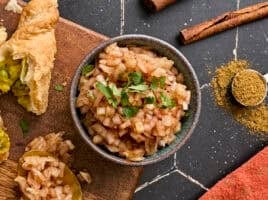
Onion Chutney
$0.99 recipe / $0.08 serving

Homemade Naan Bread
$2.62 recipe / $0.32 serving

Indian Style Creamed Spinach
$5.35 recipe / $1.34 serving
Storing & Reheating
Store any leftover pumpkin curry separately from the rice so both keep their best texture. Once cooled, transfer each to an airtight container and refrigerate for up to 3-4 days.
Reheating
For the curry, place the leftovers in a saucepan and warm over medium heat, stirring often, until heated through. The curry will thicken as it sits in the refrigerator, so add a splash of vegetable broth or water if needed to loosen the sauce.
For the rice, I’ll transfer it to a microwave-safe bowl and break up any clumps with a spoon. Add 1 tablespoon of water per cup of rice, cover with a damp paper towel, and microwave in 30-second intervals, stirring between each one, until warmed through.
Freezing
I don’t recommend freezing this vegan pumpkin curry. The coconut milk can separate as it thaws, which may leave the sauce grainy or watery. I’d stick with refrigerating any leftovers and enjoying them within a few days.
Other Vegetable Curry Recipes to Try
- For another veggie-packed option, try our Eggplant Curry, made with roasted eggplant, tomatoes, and warm spices for a thick, smoky curry!
- If you need dinner on the table fast, our 15-Minute Vegetable Curry uses frozen vegetables and a simple coconut curry sauce for an easy weeknight meal.
- I also like our Chickpea Curry when I want something hearty and filling, with chickpeas and kale simmered in a creamy curry sauce.
- For even more plant-based protein, try our Tofu, Spinach, and Green Pea Curry, with tender tofu, plenty of veggies, and warm curry spices.
More Easy Pumpkin Recipes
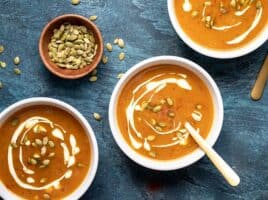
Easy Pumpkin Soup
$2.69 recipe / $0.67 serving

Pumpkin Bread
$5.45 recipe / $0.21 slice

Chipotle Pumpkin Pasta
$3.34 recipe / $0.84 serving

Pumpkin Muffins
$4.92 recipe / $0.41 each
The post Pumpkin Curry appeared first on Budget Bytes.
PakarPBN
A Private Blog Network (PBN) is a collection of websites that are controlled by a single individual or organization and used primarily to build backlinks to a “money site” in order to influence its ranking in search engines such as Google. The core idea behind a PBN is based on the importance of backlinks in Google’s ranking algorithm. Since Google views backlinks as signals of authority and trust, some website owners attempt to artificially create these signals through a controlled network of sites.
In a typical PBN setup, the owner acquires expired or aged domains that already have existing authority, backlinks, and history. These domains are rebuilt with new content and hosted separately, often using different IP addresses, hosting providers, themes, and ownership details to make them appear unrelated. Within the content published on these sites, links are strategically placed that point to the main website the owner wants to rank higher. By doing this, the owner attempts to pass link equity (also known as “link juice”) from the PBN sites to the target website.
The purpose of a PBN is to give the impression that the target website is naturally earning links from multiple independent sources. If done effectively, this can temporarily improve keyword rankings, increase organic visibility, and drive more traffic from search results.